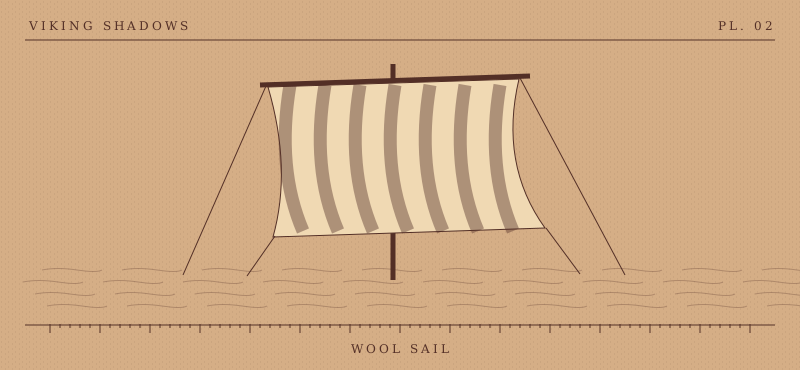
From Fleece to Square Sail
A Viking sail began on land. Well before a crew could put a ship before the wind, somebody had to turn wool into thread and thread into a broad, dependable cloth.
A Viking sail began on land. Well before a crew could put a ship before the wind, somebody had to turn wool into thread and thread into a broad, dependable cloth.
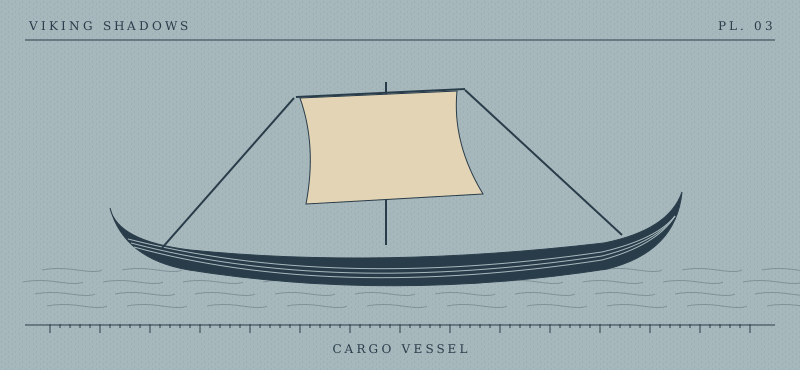
Imagine loading a ship one bundle at a time. The first question is where to put the weight. For the people who sailed cargo across the North Atlantic, the shape of the hull mattered as much as the sail above it.
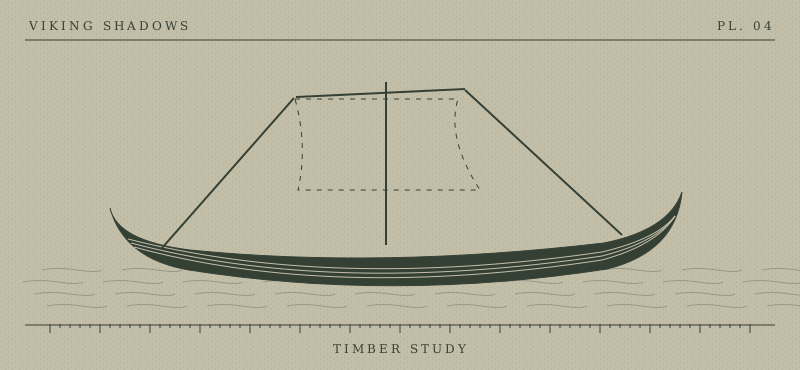
A ship on a museum floor and a ship under sail can begin with the same fragments. Between them lies a succession of decisions about which lines survive in the timber and which must be inferred.
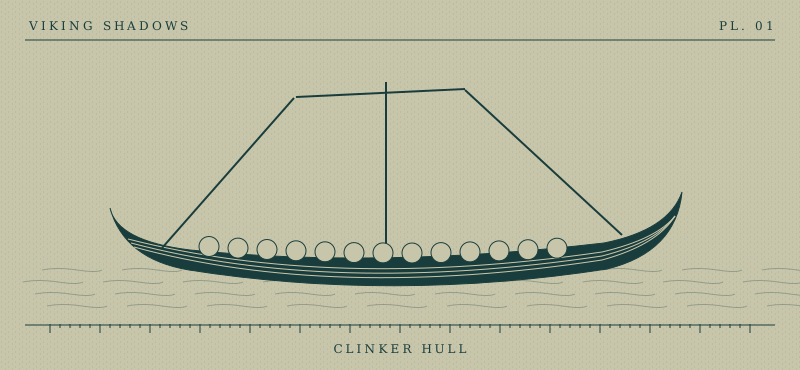
Lay a strip of tracing paper over the side view of the ship. Mark just three points along the upper edge, one at either end and one amidships.
Cut two colours of paper into narrow strips. Lay five strips of one colour side by side to stand in for the lengthwise threads of a sail.
Fold a sheet of paper in half and draw half a broad hull section against the fold. Cut along the line and unfold it to see the space inside.
Choose three marks for a ship drawing: a solid outline, a dashed line and an empty space. Write their meanings on the page before you begin.
Start with a small piece of split wood and a pencil. Look for a line in the grain that continues from one end to the other.
Plain weave makes a small checkerboard. A twill can produce a diagonal even though neither set of threads runs diagonally across the cloth.
A narrow ship printed large on one page can look broader than a cargo vessel printed small on another. Begin your comparison with the scale bars.
Cut a curved strip of card and set aside its middle third. Give the remaining pieces to a friend and ask them to draw the missing section.
Take three strips of thin card and lay their edges over one another. Tilt the assembly toward a lamp to bring the seams into relief.
Hold a square handkerchief by its upper corners. Ask someone to press gently against the centre while you watch the lower edge.
Imagine a loading exercise with six identical bundles and one fragile parcel. Draw a plan of a cargo hold and cut seven paper shapes to fit it.
Choose one Viking ship timber from a museum description. Give yourself fifty words to explain what a visitor can see and why it matters.
In a side view the plank seams lead the eye along the ship. A section drawing turns the view through a right angle and reveals another pattern.